From Cobalt Mines to Solar Power – How One TCK Got Engaged in Resource Politics

From Cobalt Mines to Solar Power – How One TCK Got Engaged in Resource Politics

By Haddie Grace

from Among Worlds – Politics & Public Service – June 2022


“I know people who lived through the events I was reading about.”

When people find out I am a graduate student, they often ask what I’m studying. When I tell them I’m studying the politics and governance of the energy and extractive sectors in sub-Saharan Africa, some of them follow up with: “How in the world did you get interested in that?” I guess the short answer is that I’m a third culture kid. Here is the long answer.

When I was eighteen and in undergraduate studies, I took a comparative politics class. The upper-level course was overwhelmingly challenging for me. After several weeks of slogging through empirical research on complex political phenomena, struggling to decipher the implications of over-my-head statistical analyses, and shedding tears of frustration trying to complete assignments, I considered dropping the class. But then I came across something political scientists refer to as “the resource curse.”

To oversimplify for brevity’s sake, the resource curse is the observation that under certain conditions, natural resource wealth, particularly oil wealth, is correlated with political dysfunction in low- and middle-income countries. There is evidence that oil wealth and certain types of mineral wealth play a role in triggering and sustaining civil conflict, increasing corruption, and strengthening authoritarian regimes. With the rise in renewable energy development, political science literature has expanded to consider a “green curse”—the observation that renewable resources come with their own set of challenges and risks for conflict and corruption.

For this class, I read extensive literature on the subject and noticed many of the examples came from sub-Saharan Africa: from the role of alluvial diamond mining in Sierra Leone’s civil war, to tungsten and tantalum conflicts in the Democratic Republic of Congo, to insurgent militias controlling gold mines in Mali and Burkina Faso, to the role of oil in the Sudanese civil war and South Sudan’s secession.

I was raised in sub-Saharan Africa. These accounts did not feel distant or purely academic to me. I know people who lived through the events I was reading about. Some of my longest and closest relationships are with people who were born in refugee camps, displaced in the midst of violent conflict sustained by the extractive industries. I have multiple friends who had to evacuate because of political instability and terrorism in the Sahel. I know and love people who have personally experienced the acute consequences of the mismanagement and global exploitation of natural resource wealth, wealth that should have brought economic opportunity, critical development, and an increase in prosperity.

I thought of the gold rush in Senegal’s Kedougou region, where I grew up. I thought of the recent discovery of vast off-shore oil and natural gas fields found in the Senegal-Mauritanian basin. I couldn’t help but wonder if this would end up in some future case study analyzing, yet again, how corruption, like a wand-wielding magician, vanishes profits into hidden pockets and virtually nothing is better than it was before.

Suddenly, this class didn’t seem so abstract and theoretical anymore. Something had hit close to home. Too close to home. This was a subject I understood. I had a visceral response to it. I wanted to know everything about it, even if it meant crying through pages of methods sections full of dizzying alphabet-soup math. I finally had a topic for my research paper. I didn’t drop the class.

As I continued my research through subsequent courses, I became intrigued by how the energy and extractive sectors are closely linked. Fossil fuels are the obvious extractive resources used in energy production, but certain minerals have emerged as key resources in the generation of renewable energy. Extractive resources such as lithium and cobalt are essential components of lithium-ion batteries that power electric vehicles and store energy from renewable resources, like wind and solar power.

“Suddenly, this class didn’t seem so abstract and theoretical anymore. Something had hit close to home.”

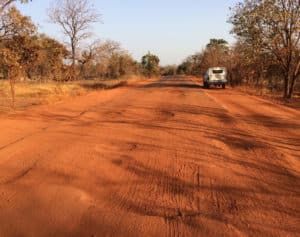
Haddie’s family vehicle in the Kedougou region

People conflate middle- and low-income regions with being “poor regions,” but the African continent boasts incredible resource wealth. For example, the Democratic Republic of Congo is widely considered one of the richest countries on earth in terms of resource endowments, with tremendous renewable energy capacity and over half of the world’s known cobalt deposits. Despite sub-Saharan Africa’s rich energy endowments, renewable and nonrenewable, the region has some of the lowest energy generation and consumption rates in the world.

The development of these resources will not come from the public sector alone; it requires scaling up private investment, especially foreign investment. Much research is needed to inform domestic policy development in these areas, as well as research to inform private-sector decision-making. This is the research I want to do.

As an American citizen who grew up in sub-Saharan Africa, I find myself uniquely positioned to act as a liaison, whether it be for the US government directing aid to renewable energy sectors, or to help private US companies safely and ethically invest in these emerging markets.

I spent my developing, identity-forming years in rural Senegal with solar panels on my tin roof. A family friend died from mercury poisoning because of local mining practices, and his nine children were left without a father. When I was nineteen, I lived for five months off-grid in Cameroon. I saw a woman receive urgent medical care while people held flashlights so the nurse could see to stitch a head wound.

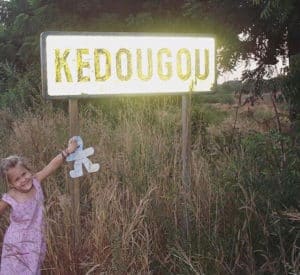
Haddie poses with Flat Stanley, 2001

There is an exigent need for development, regulation, and transparency in the energy and extractive industries. I am painfully, distressingly aware of this in a way I never could be from listening to course lectures or reading journal articles or watching documentaries.

If I was not a TCK who happened to have a personal connection to that week’s reading assignments, I probably would have dropped that class.

If I had dropped that class, I likely would not have gone on to pursue a master’s degree in political science with a concentration in policy analysis. I would not be spending this week preparing to present my master’s research: a comparative analysis of the domestic uptake of renewable energy across three countries in sub-Saharan Africa. I would not be starting my PhD in the fall (specializing in comparative politics—can you believe it?).

But I am a third culture kid.

And I love my countries.

Under Senegal’s gold and oil and sunshine and wind are the red pebbles of the rural “hometown” that shaped me. I have no expectations of becoming a renowned expert spearheading revolutionary change. I don’t know what I will actually end up contributing, or if it will be valuable. I hope so. If anything, I see my research as an homage.

To the place that for most of my life, I called home.

How in the world did I get interested in this? How in the world could I not?

“I see my research as an homage. To the place that for most of my life, I called home.”

Haddie Grace has US citizenship, grew up in Senegal, graduated from university in North Carolina, met her Québécois husband in Cameroon, and immigrated to Canada in 2019. She regularly volunteers with TCK care programs and has served as a staff member at TCK re-entry/transition seminars in the United States and Canada.


A Hesitant Denial

a hesitant denial

The Ask

Have you ever made a hesitant denial and had the outcome be better than you could have imagined?  This spring it happened for me.

Micah wrote to me* a few week before he was scheduled to join me and more than twenty student teachers in Indiana for STAGE’s (Student Teaching And Global Experience) Pre-Experience Orientation (PEO).  This training happens once a semester for the student teachers Interaction International places all over the world. 

As soon as I read the subject of his email, I knew what he wanted.  I knew I needed to make a difficult decision.  Micah wanted permission to miss PEO.

He quickly laid out his life as a Missionary’s Kid (MK).  He grew up in Kenya where his parents serve as dorm parents at an MK boarding school.  Basically, he wanted me to know he spent all his growing up years at an international Christian school.

Before he made his ask, he added that his parents were in town for two weekends–the one when PEO was scheduled and the next, his sister’s wedding. He wanted me to excuse him from the mandatory PEO.

A Hesitant Denial

I struggled with the answer. I know how precious and rare time with family is when spread across different continents. Knowing that they only had two weeks including a wedding made the decision more difficult. I swallowed hard, and told Micah he needed to come to Indiana. 

It was a hesitant denial.  I may have crumbled if he pushed back.  Thankfully, he didn’t.  (Future STAGE students, please don’t get any ideas!)

Being an MK is definitely an advantage to teaching in an international school, but there’s so much more to succeeding in international education than growing up internationally. I knew Micah still needed to  learn so much about teaching internationally from an adult perspective. I also knew Micah’s perspective and experiences would benefit the rest of the student teachers.

At PEO

As we discussed STAGE’s importance to the Great Commission, transition in schools, the Third Culture Kid (TCK) Profile, grief and loss for the TCK, how to start with the end in mind, and so much more, Micah and his fellow TCKs added so much richness to the training.

Halfway through the first full day of PEO, Micah took me aside.  He thanked me for making him attend.  I confessed to him what a hesitant denial my answer was.

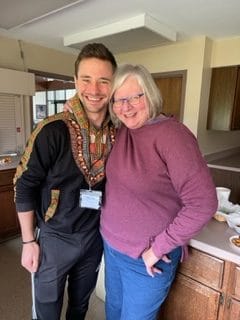
Micah and Sheryl

Micah ended the weekend saying he “found a home at PEO” because he was so understood. If you know TCKs, you know that is a monstrously strong and positive statement. Another TCK concluded, “As a TCK, it was more edifying and therapeutic than informative but that was exactly what I needed.”

Standing Together

Saying, “No” is rarely easy for me.  I’m so glad I wrote my hesitant denial in a firm way.  I’m so glad I don’t stand alone in believing this training is important.

Standing behind my hesitant denial are so many.  The Christian colleges belonging to STAGE understand PEO is important to the formation of their student teachers who will do part or all of their student teaching internationally.  The schools receiving STAGE students know the training they receive at PEO fills in knowledge gaps that don’t exist for those teaching locally.  The students and their parents can see a difference in the way STAGErs function and care.

STAGE makes a difference.

Making a Difference

If you partner with Interaction International, you made a difference–a difference that will keep going. You made it possible for PEO to give Micah a sense of belonging and a sense of being understood. You empowered 21 university students to student teach internationally. You impacted these student teachers and the 100s of MKs and other TCKs they will teach in the fall—and countless others throughout their careers. Your reach is long and deep. Thank you for partnering with us to make a difference.

If you don’t yet partner with Interaction International, you can.  You can make a difference for future PEO classes.  By contributing to Interaction’s General Fund, you make a difference for STAGE students.

Inflation is a real problem for STAGE.  Beyond the costs of placing STAGE students, there are many different costs associated with hosting a weekend training. As the price of everything increases drastically, we’re trying to keep the cost of participation in STAGE from becoming prohibitive.

A gift to the General Fund/Undesignated will allow us to cover our costs without raising our prices.  An unrestricted gift will make a world of difference for a student teacher, their students, and the schools they go to.  Your gift matters.  Please, make a tangible difference and not a hesitant denial.


*Sheryl O’Bryan, Director of STAGE (and a few other things), lover of coffee, and ardent fan of Mr. Bingley.


It Absolutely Matters

it matters

It absolutely matters, doesn’t it?

Once in a while, I find myself in a place where I know what I do matters, but I wish I had proof that it absolutely matters. I felt that way as we wrapped up another school year of TCK Connect– our online hangout for MKs/TCKs. I know TCK Connect matters. If it didn’t, people wouldn’t keep showing up for it. However, that’s not the affirmation my heart longed for at the end of another year.

The words my heart needed came in an email a few hours later. It was from Carter*, a 16 year old boy who has attended TCK Connect for the last two years. If you know 16 year old boys in general, emailing doesn’t rank high on their list of fun things to do. Yet this email from him was full of raw feelings that boiled down to gratitude for TCK Connect and the way we run it.

“What surprised me at TCK Connect was that, while Christian, it was a simple meeting (and a fun one at that) with no ‘ulterior motives’…The part that really ‘hooked’ me though was the game…it convinced me that this was made for TCKs by someone who understood TCKs. I first attended during a strict [Covid] lockdown, while attending online school, during our wet, grey, sea-side winter and spring…the small groups basically kept me from going insane.

Throughout the time I’ve been at Connect, it’s always been one of the highlights of the week and really the only time I’ve been able to meet people like me”

My whole body reacted to Carter’s words. Tears escaped my brimming eyes. Chills formed goosebumps on my arms. My throat constricted. My brain could only form a few words, “It absolutely matters. Thank you, Lord!”

More Affirmation

it matters

As if that wasn’t enough, a few hours later, email arrived with more affirmation from 14 year old Lacey*.  She said,“All these TCK Connect calls have really helped me move past a bad experience I had in the past with making TCK friends, this last call really helped me know that I now have an awesome group of people I can actually trust.”

TCK Connect–it absolutely matters because TCKs absolutely matter.

Thank You

If you partner with us through prayer, finances, time, and/or encouragement, you are responsible for TCK Connect. You paved the way for these two (and others) to have life altering experiences.

As our partner, you make it possible for our computers, internet, and Zoom to work. You make it possible for our staff to have time to invest and interact with TCKs all over the world. You give TCKs a place to go where people see them, understand them, and value them.

To those of you who say it absolutely matters and give to Interaction International, thank you. Thank you for not just giving but for investing in Interaction International’s infrastructure, staff, volunteers, and the TCKs we get to serve.  You absolutely matter.

Your giving changed lives this year. I hope your eyes are leaking tears of joy as the truth of your impact makes its way from your brain to your heart.

Thank you for joining us in this important ministry.  It matters.  It really does.

An Invitation

For those of you who do not yet give your time, talent, or treasure to Interaction International and its ministries, it’s not too late to join in.  We are actively looking for people to join us on this journey of ministering to MKs and other TCKs.  We welcome you to invest in TCK Connect to ensure that TCKs like Lacey and Carter have a place to go where they can develop community that understands the intricacies of a cross-cultural adolescence.

We invite you to give to Interaction International.  Every program and every supported staff member have financial needs.  Your gift will matter.  It will make an impact that matters.

Will you join us?  Will you click on the give button and say, “It absolutely matters?”


Sheryl O’Bryan serves as the Director of TCK Services, the Director of Communications, the Director of STAGE,  and a co-host of TCK Live.  When she’s not madly changing hats at Interaction International, you can find her meandering through her neighborhood with her favorite pup, contemplating the vastness of the ocean, or creating some new art.  What she does–it absolutely matters.

2 Issues with the RVR Third Culture Model

2 Issues with the Historical RVR TCK Model

2 issues with the RVR Third Culture model


I believe there are 2 issues with the RVR Third Culture model.  Before we start to unpack them, I need to say a few things.

I need to begin this post with a clarification–and maybe taking out a life insurance policy. In a day and age when Cancel Culture’s insatiable search for new targets looms around every corner, I wonder if daring to critique Ruth Van Reken’s foundational work is like walking through the forest wearing fake antlers on the opening day of deer season.  It’s a perilous endeavor.

I have the utmost respect for Ruth Van Reken’s work and legacy. I consider her a friend and wise sage. She graciously shared some of her stories of the early days Third Culture and TCK development on an episode of  TCK Live.  We’ve spent time together face to face.  We’ve exchanged many emails in the process of writing this article. I shared my perspective on her original three-circle model, and she read this article before I pushed the publish button. I also shared with her my alternate version of the Third Culture Model that I will unpack in a subsequent article.

My intention is to further the conversation.  I am not attempting to discredit her groundbreaking work.  I appreciate Ruth, her work, and her willingness to humbly engage me and many others.

I love the original TCK Model Ruth first published in the Third Culture Kid book (2nd Edition) but copyrighted in 1996. It’s a good model and I’ve used it for decades. It works. It’s simple, elegant and beautiful. Like Coca Cola, it’s a classic.

In numerous conversations with Ruth, she reminded me that these definitions and models are works in progress.  Her model is the first graphic launch pad for furthering the understanding of a complex idea.


Room for Improvement

Dr. Ruth Useem, who coined the term Third Culture Kid, wrote in a letter to David Pollock in 1994, “Concepts change as we get to know more; other times concepts change because of what happens in the world is changing” (Page 21 of the TCK Book). In other words, sometimes even the best work needs to be adapted or modified with additional knowledge or cultural evolutions.

In the previous article I shared 6 flawed models trying to depict Third Culture. They have varying degrees of merit, but, in my opinion, they all failed to accurately convey important or key aspects of the Third Culture.

In this post I share two small bones I have to pick with Ruth’s 1996 pioneering version of the Third Culture model. While still a good model, and one that I would not dissuade others from using, I believe there are two unintended problems with the model that merit reexamination. First, there is an unintended reinforcement of dichotomization that could lend to encouraging cultural segregation. Second, the importance of the Third Culture maintaining autonomy from the host and passport cultures is missing.


First Issue – Forced Cultural Dichotomy

My awareness of a potential issue with Ruth’s model came in the past year as I was reviewing my presentation notes in preparation to teach our Foundations of Organizational MK/TCK Care. When preparing, I typically create a fictional “Jonny TCK” with a ”“Host” and “Passport” culture based on one or more of the participants’ cultural experiences.

I illustrate how each culture is unique from the other, but the Third Culture is distinct from either of those two cultures. Typically the chosen cultures are combinations like Canada and Kenya, Brazil and Afghanistan, England and Indonesia.  There are so many different combinations with clear and easy cultural distinctions. However I tripped myself up on this particular occasion; I was about to choose England and Australia for my class illustration.

When choosing what are stereotypically divergent cultures, the three-circle model created by RVR works beautifully. It is clear where to categorize overt cultural differences like language of business, religious beliefs, time orientation, food, etc. The participants can easily catalogue each cultural preference as belonging to either the “host” or “passport” culture we’ve picked for the day’s example..

Using the example of a TCK whose parents join the American foreign service and are assigned to work in Nepal, I might ask the participants which section to place the following words: English, Nepali, Christianity, Hinduism, Time Oriented, Event oriented, coffee, and tea. The participants quickly end up with something like this:
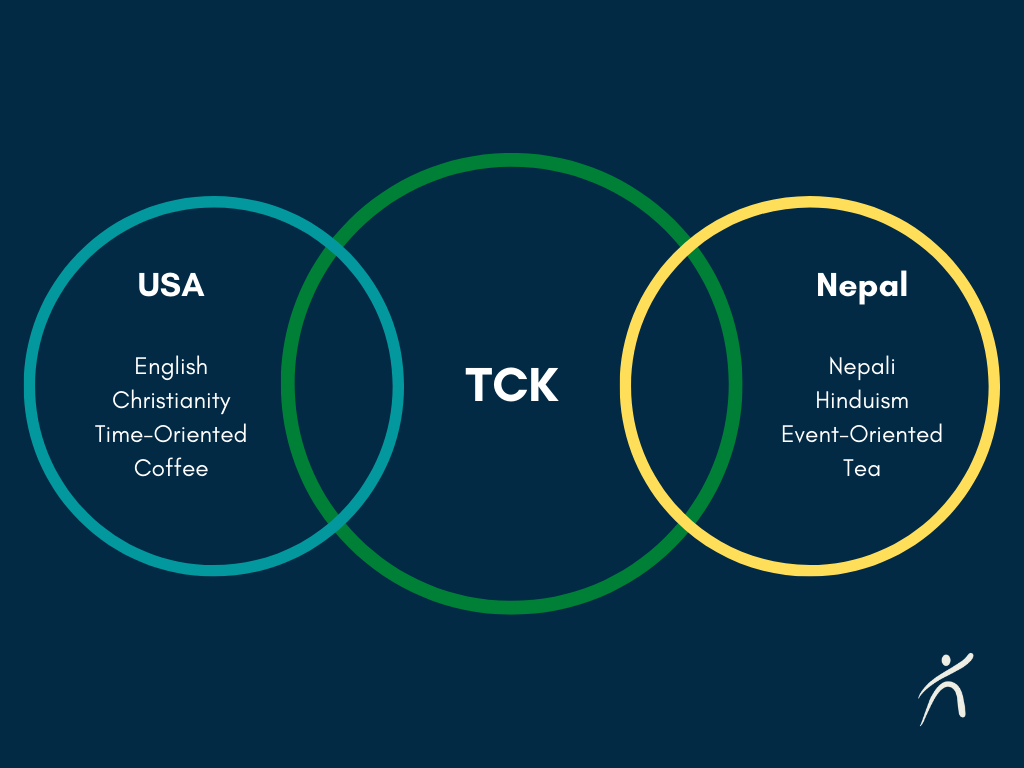
TCK Model - USA/Nepal


From there I highlight cultural issues typically connected with the TCK profile and help participants visualize how the Third Culture is a culture unique from either of the other two cultures. I would ask them which culture best fits with the following descriptions: high mobility, relationally rooted (not geographically rooted), hidden immigrant, multilingual, ambiguous loss, global connections. We add that to the graphic and the masterpiece is complete.
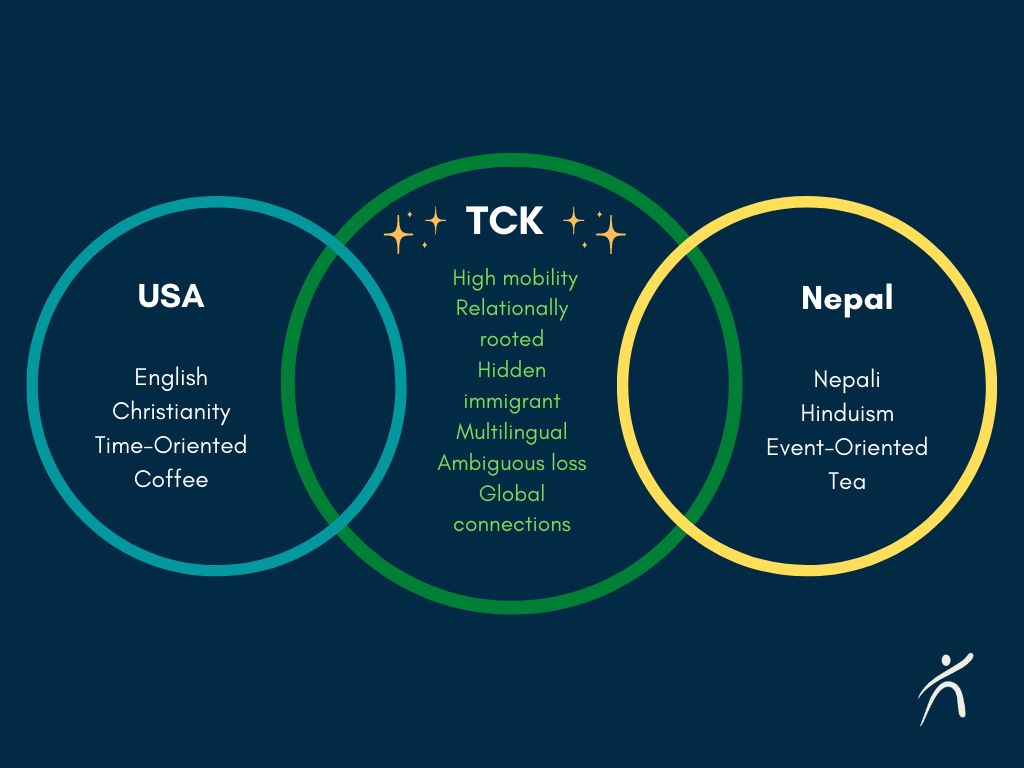
 

With a poignant pause, I lean back and watch the adult trainees take it in. Light bulb moments flash across their faces, fingers begin to feverishly pound out life changing notes, and somewhere, in the distance, a bell rings and another TCK gets their wings (plastic ones, from an airline pilot).

But as you may already be anticipating, this grand crescendo moment in the presentation began to clang and gong uncomfortably in my mind as I thought through the implications of the two countries being England and Australia. Running through my mind on how to make Australian and British culturally distinct from each other, my typical go-to categories (language, religion, food–yes, there’s Vegemite, but one food does not a category make) didn’t work as easily.  The model was about to get messy. The two cultures had too many overlapping similarities. They both speak English. Both are post-Christian. Both have McDonalds.  Both are Commonwealth nations. And both are mad about cricket- especially Ashes cricket! What was I going to do?!
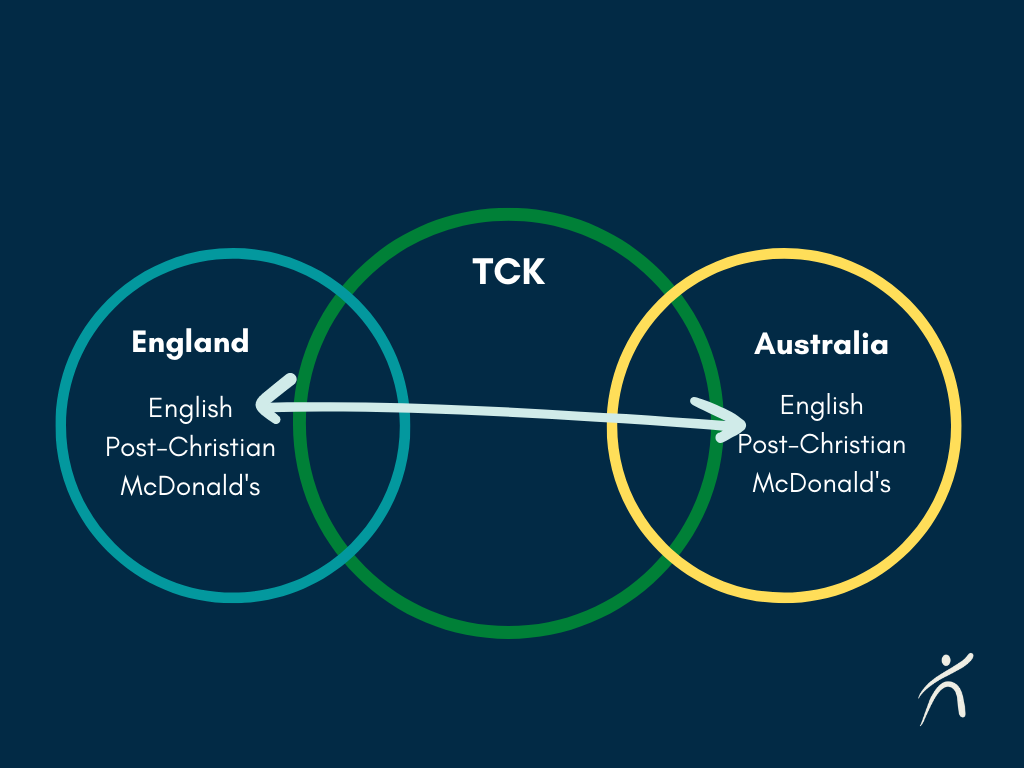
 

Now before my inbox gets filled up with well-deserved complaints about what an ignorant and ethnocentric American I am not knowing  the “obvious” cultural differences between the “Home of Queen Elizabeth” and the “Land Down Under,” I’d like to point out the two countries are nearly identical on 5 out of 6 of Hofstede’s categories .

Side note, Hofstede’s country comparison is a fantastic place to allow TCK teens to play and visually see the cultural stresses that may exist between their external cultures they navigate. I highly recommend incorporating it into your cross-cultural transition seminar material.

Returning to the three-circle diagram, I faced an issue–Venn Diagrams are supposed to overlap where there are commonalities. But in the RVR Third Culture model, the host and passport country do not overlap at all with each other. For the sake of emphasizing the uniqueness of the Third Culture, the RVR Third Culture model separates the primary and secondary cultures as being completely distinct from each other. But in this moment of clarity, the model inadvertently pits the host and passport cultures against each other. So, for TCKs who find fluidity in their geographical home, the model graphically places pieces of their cultural roots at odds with each other. It’s one or the other, never both.

In this day and age with heightened cultural sensitivity and inclusivity valued in much of the Western world, a model that does not allow or permit for similarities and commonalities to exist may be interpreted as (insert correct “woke” word here).

With this revelation of the host and passport culture often having commonalities, especially in the age of globalization, several new thoughts and moments began to spin through my head. Like a cascade of water, the ramifications of needing to better represent the Third Culture and the dynamic life TCKs experience among mainstream cultures in addition to their own interstitial culture flooded my mind.

Model Revised, but new issues arise

My knee-jerk response was to slide the circles around to form an echo of the flawed models I shared previously, just label them differently. A diagram that may look something like this:
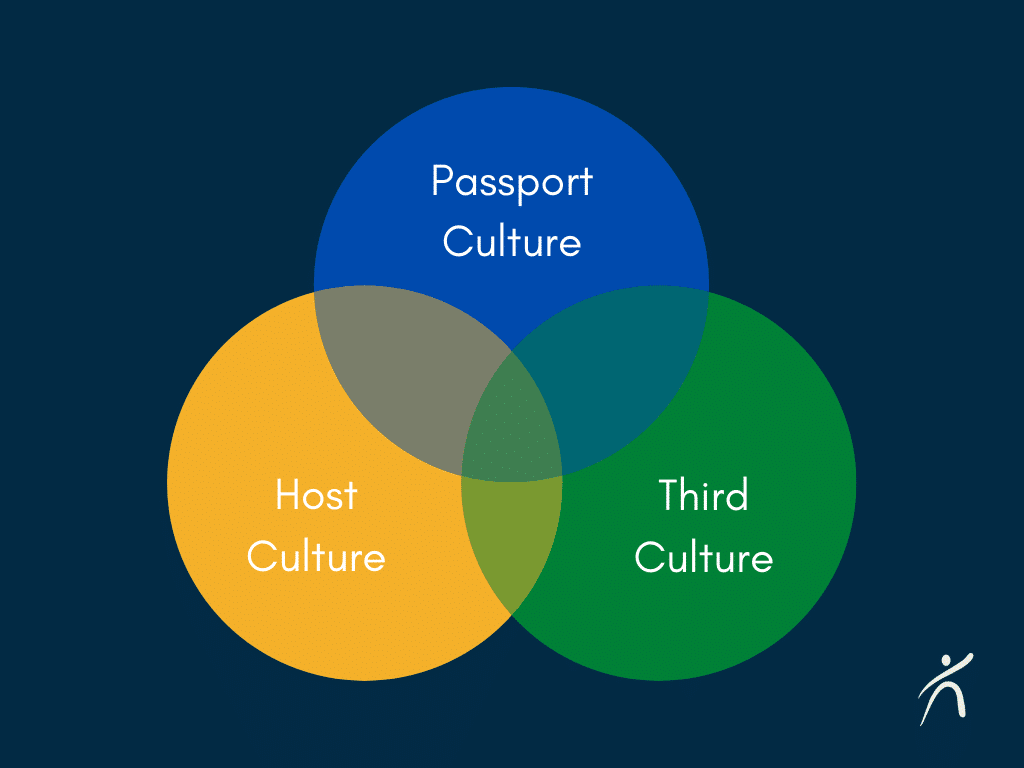
 

New Flawed Model


This adapted model differs from the flawed diagrams from my previous article because Third Culture is not labeled as existing at the nexus of all cultures, but rather the entirety of a separate circle like RVRs’ model.  The Third Culture is now unique and still interplays with the first and second cultures. The Third Culture is the entirety of the green circle, not just a section or an overlap.

But as I processed my conundrum aloud with my good friend and Interaction International colleague Sheryl O’Bryan, I began to realize that while this resolved allowing there to be places of harmony between host and passport cultures, it didn’t solve the problem.

A Second Complication- Uniqueness of TCK

A second complication began to crystalize in my mind with the historical model. If each ring in this modified model represents a culture, and the Third Culture, as articulated by Dr Ruth Useem, is distinct from other cultures but shared with others who have had high cross-cultural mobility, the Third Culture ring should not overlap any other culture. In essence, it needs to stand apart.

I had to revisit my original understanding of the Third Culture. While it is birthed out of a confluence of two or more cultural exposures, it is wholly distinct. It does not borrow or share with other recognizable cultures. How is that possible?

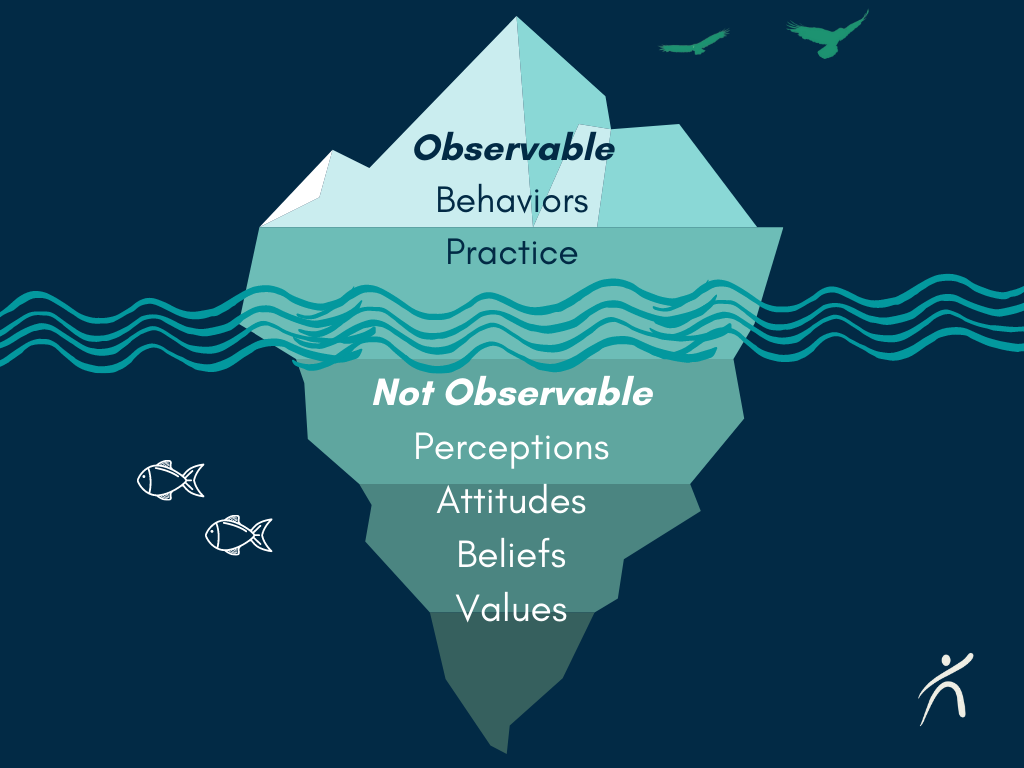
To highlight the uniqueness of the Third Culture apart from other accepted cultures, ask yourself questions like: what is the language of the Third Culture? What is the faith of the Third Culture? What are the foods, the fashions, the arts of the Third Culture? The Third Culture doesn’t appear to have many (if any) outward expressions of an observable culture. We know this is true because one cannot immediately identify a TCK simply by their appearance and rarely by their outward behavior.

Those who live in the Third Culture seem to develop a radar, a special 6th sense, a gravitational pull of sorts, to find one another. Be it the quick deep breath and pause when they are asked where they are from, a slight biting of the lip when a group talks about political or especially global issues, a slowness to volunteer their opinions or values, awkwardly asking for clarification of an event or slang word that everyone else in the otherwise homogeneous clique knows.  All raise the question, “Is this another TCK?”  Perhaps this is why so many TCKs connect with the term hidden immigrant.
iceberg

So, while there may be limited outward expressions of the Third Culture, the deeper cultural values are where TCKs find more uniformity. However, most of that may even exist, ironically, in the lack of uniformity. The Third Culture as a whole leans towards not only a tolerance, but an appreciation of diverse customs, values, and belief systems. In this synchretistic if not pluralistic view of the world, the culture of the Global Nomads seems to find its commonality in embracing the differences. Living between worlds yet never feeling full ownership of a place on this globe contributes to this commonality of diversity. Thus, TCKs are well described as members of the Interstitial Culture.

When identifying the benefits and challenges of the TCK profile as expressed in Third Culture Kids: Growing Up Among Worlds, descriptions including an expanded worldview, a three-dimensional view of the word, and ignorance of (passport) culture are used. Other tendencies ascribed to TCKs include ambiguous loss, identity confusion, and dynamic problem-solving skills. One of the gifts, maybe even hallmarks of being a TCK, is the chameleon-like ability to quickly adapt to their cultural surroundings–or to choose to brashly stand out.

These–and many others–are a mix of  perceptions, attitudes, beliefs, and values connected to the Third Culture. They are distinct from basically any other culture of the world. In the beautiful kaleidoscope of cultures around this planet, the Third Culture seems to wander among them all without finding true companionship among the multitudes.

TCK Snobbishness

Because the Third Culture is distinct from all other cultures, it can have the appearance of elitism–a “better than you” snobbery. While I’ve seen some brandish their TCKness as a weapon of mass condescension against monoculturals to whom they relate, those TCKs often find their hubris results in loneliness. When you are in a cultural minority, claiming superiority is a one-way ticket to ridicule, ostracization, and isolation.

To that end, I encourage TCKs to have hope. There are, in fact, many others out there, hidden in plain sight, who are like you. The number of individuals who have had significant experience crossing cultures through their developmental years is astounding. I’ve read claims (none with numbers I can verify) that if the larger umbrella of Cross-Cultural Kids (of which TCKs is a sub group) were a nation, it would be the third largest in the world.

However, don’t limit yourself to finding “homeness” within your TCK tribe. There are many others out there who will embrace you in the beauty and the hang ups of your TCKness. When I remind TCKs that David Pollock, arguably the greatest champion of TCKs in the 20th century, was not a TCK, there is hope for an end to feeling isolated. You will find people with whom you can trust your wandering roots.

Need for Study

Cultures are like the dunes of the Sahara; they constantly change through the influence of their surroundings. While the normative cultures of this world adapt, we need academics and cultural anthropologists (basically people smarter than me) to continue discovering new nuances and developments on the trail blazed by Dr. Useem and so many others.

What are those core, defining cultural values born out of high mobility in cross-cultural contexts? How is the Third Culture homogeneous in its proclivity for inclusiveness and permissiveness of other cultures? What are new trails of understanding that need to be hacked out of the constantly evolving jungle of the Third Culture?  Let’s see some scholarship that can answer these questions!

Alas, I have exceeded and trod beyond the scope of what I have “learnt,” so I will return from my ponderings about the solitary nature of the Global Nomad’s culture and refocus on solving the issue at hand. Is there a way to better graphically depict the Third Culture?

Wrapping Up and Looking Ahead

Ruth Van Reken’s model is still worth using. It has stood the test of time.  That alone speaks volumes.

However, a potential area for growth is figuring out how to acknowledge and to graphically represent that it forces cultural dichotomies when, in reality, cultures overlap to at least a small degree. It also indicates the Third Culture has attributes of both passport and host culture when maybe the Third Culture is wholly unique.

As Sheryl and I bounced around ideas, a solution percolated to the top that seemed to respect the uniqueness of Third Culture, and, best of all, provide an opportunity for a flexible model allowing individual TCKs to represent distinctiveness in their expression of the Third Culture and their personal culture mix. In this fourth and final piece of this series, I will offer, for your consideration, an alternative model which may connect better with TCKs trying to express themselves while reinforcing the interstitial nature of the Third Culture.  Stay tuned.

Update – Part 4: The Adaptable TCK Model has posted


Bret Taylor is the Interim Executive Director of Interaction International. He’s been working with MKs/TCKs since 1999. He’s co-host of TCK Live, directs the Transit Lounge programs, presents at MK/TCK Caregiver Training, chairs MKCS, and helps with Among Worlds, Interaction International’s magazine for and by Adult Third Culture Kids.

1 Life Forever Changed

1 Life Forever Changed

Tanya – 1 Life Forever Changed

One–count it, 1 life forever changed is no small thing.  Last week we received an email from Tanya. She told us we changed the course of her life.

She did her student teaching with STAGE (then known as CCTECC) in 1993 at Rift Valley Academy in Kenya. Because of that experience, she committed to teaching MKs and other TCKs in international schools. So far, she has taught in five different countries in East Africa and Europe, is just finishing her MA in English, and is gearing up for her move to the Czech Republic.

What a wonderful report from a STAGE alumna! She is doing what we hope and pray more of our alumni will do–continue to teach in international education. Janet Blomberg, former Director of Interaction and STAGE, did a survey a few years ago and discovered that slightly more than 33% of STAGE alumni teach internationally for at least a few years. She also calculated from that survey that STAGE supplied over 1000 full time Christian teachers to international schools since its inception. What a kingdom impact!

Paying it Forward

However, that’s not the end of the story–though it would be a great one. Here’s the kicker–Tanya wants to pay it forward. She asked if she could be a mentor teacher and have a STAGE student teacher.

mentor teacher

Tanya knows the power and influence of a great mentor during the student teaching experience. She knows the likelihood of a student teacher committing to international education often depends on the quality of their student teaching placement. She wants to be part of that fantastic experience for a student teacher. What a gift!

While Tanya will make one life forever changed in a future student teacher, we know her impact is part of a chain of events that will branch out as long as there are people.  Tanya impacts the students in her classroom–including the student teacher.  Then they shape other lives–other students, other student teachers, others with no connection to a school.  This chain of influence continues forever.

The Impact of a Gift

I know I’ve written about STAGE and Tanya, but really I’ve written about our financial partners. Without these partnerships–without their commitment to Interaction and its programs–there is no STAGE. Tanya never would have done her student teaching at RVA without our partners, both financial and prayer.  No STAGE student would have the opportunity to teach in Tanya’s classroom without them. Countless MKs and other TCKs would lack the influence of a strong Christian teacher if our partners didn’t invest in Interaction International.

Our partners have an amazing ROI–it’s just not monetary.  In many ways it’s better.  The return on investment is changed lives.  Understood hearts and educated minds are just part of what STAGE’s student teachers provide as they learn more of the world and the people in it.  You might make 1 life forever changed, but we firmly believe you will impact more than any of us will ever know.

To our partners–thank you for making such an impact in the world. Thank you for helping support student teachers who become mentor teachers make a difference. Thank you for making STAGE possible. You did this–and you continue to do it. Thank you! You make a difference.

To those of you reading this who don’t partner with us–will you invest in student teacher education and make one life forever changed?  Will you invest in Interaction International and it’s programs like STAGE and make innumerable lives forever changed?  Click the “Give” button at the top of the page to make a difference now.  You can make 1 life forever changed; in doing so, you’ll be part of the chain of impact that has no foreseeable end.

6 Flawed TCK Diagrams

These 6 flawed TCK diagrams are a pet peeve. Flawed Third Culture Kid (TCK) diagrams trigger me. I confess I get disturbed when individuals and organizations teach flawed diagrams of the TCK profile. I’m also a bit embarrassed to admit it, but I have a growing collection of what I consider erroneous variations of the TCK profile. But unlike a mint-error coin that holds great intrinsic value, my hoarded collection of misfit diagrams only has value in my head. But maybe, by sharing my “precious” (yes, that was Sméagol’s voice you heard) with others, there may be some redeeming value in them after all.

Incorrect/Flawed models of the TCK profile hit me particularly hard because so few people in the world, including many TCKs, really know what a TCK is. When inaccurate information abounds out in the world and cyberspace, despite good intentions of the authors, it frustrates me. Poor models convey incorrect or incomplete information about the richness and uniqueness of the TCK profile.

In part 1 of this series, Sheryl shared the origins and the development of the Third Culture Kids/Global Nomad definition. In this second offering, I will open up my vault of flawed diagrams. Don’t worry! I will intentionally withhold sources–the identities of those who don’t quite get it are safe with me! I will unpack the good intentions and unfortunate missteps in their modifications of the original TCK Venn Diagram developed by Ruth Van Reken.

Lest I spare any criticism and analysis, in part 3 of this series, I will unpack where there is room for improvement of the juggernaut model–especially in light of the current cultural sensitivity movement. For any who dare to continue the journey, in part 4 I will risk adding my own name to contributors of flawed TCK diagrams, and I will put forth for your consideration a new model that incorporates a better reflection of cultural blends while simultaneously helping to illustrate the varying degrees of “TCKness” that are reflected in the Global Nomad community.

It’s amazing to me in this age of globalization how quickly misinformation spreads. While the internet has the potential to help people track down original sources in just a few clicks, why does it seem that the misinformation goes viral? I’ve seen so many share or repost some flawed graphics instead of the original TCK Venn diagram. So in order to help us identify the counterfeits, let us behold the original in all its glory and splendor.


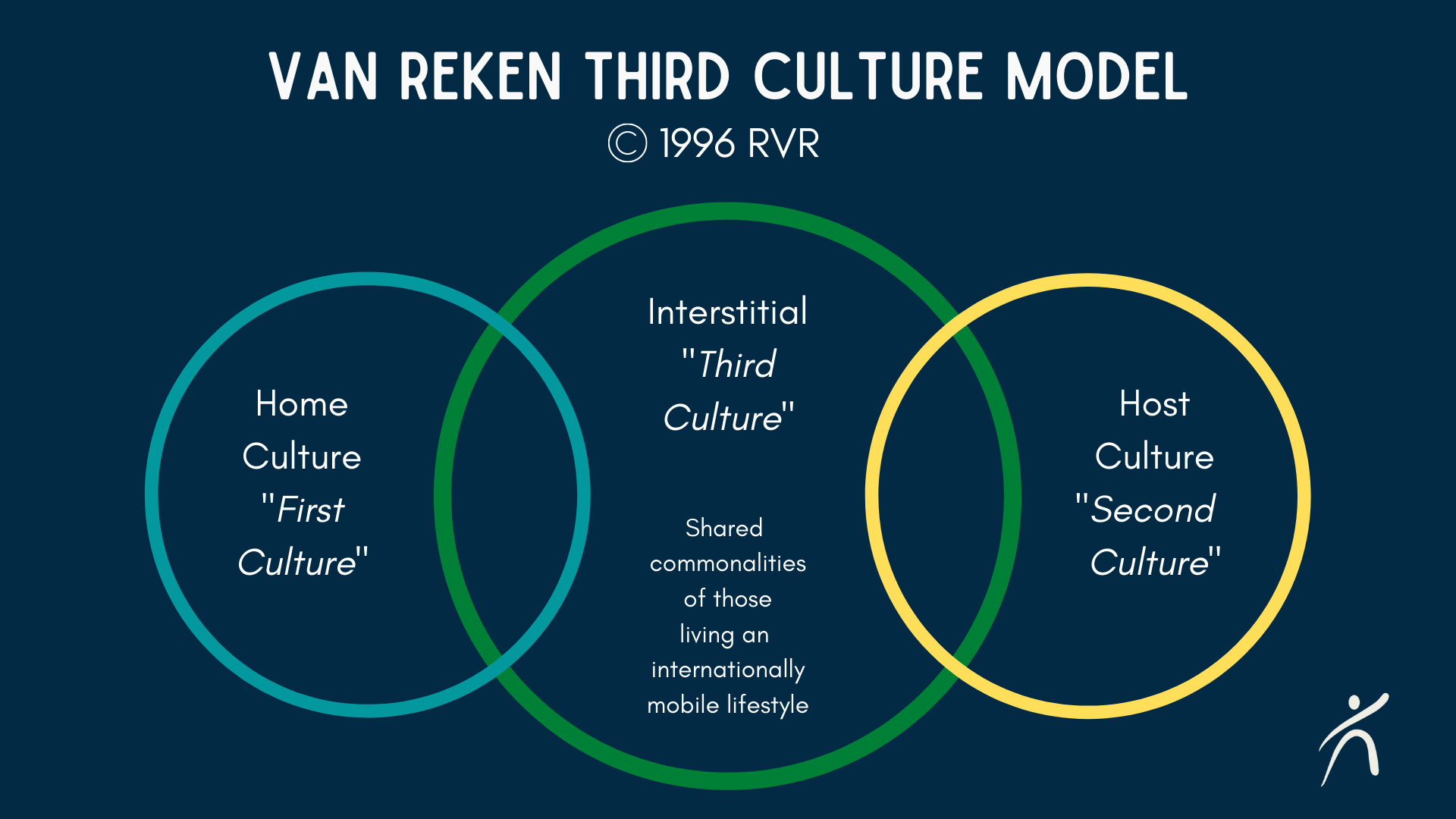
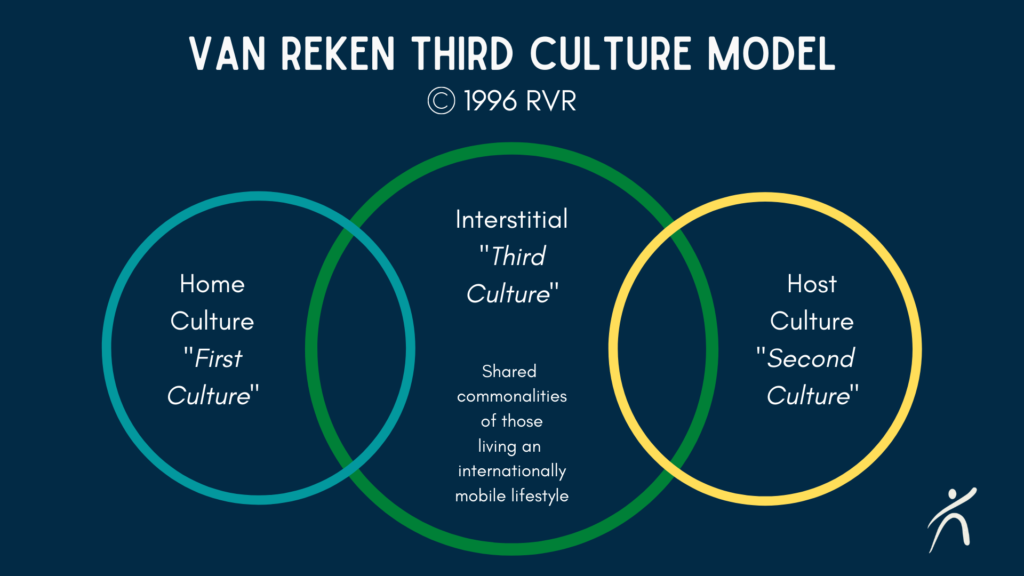
The Van Reken Third Culture Model

Van Reken Third Culture Model

Despite being widely attributed to David Pollock (former Executive Director of Interaction International), this version of the Venn Diagram was actually developed and copyrighted by Ruth Van Reken in 1996. Though widely used by Ruth Van Reken and David Pollock as they presented on the topic to international schools and businesses, it was not included in the 1999 edition of the Third Culture Kids: The Experience of Growing up Among Worlds but did get included in the second edition.

I will dive into the particular strengths of this model in part 3 of this series; I will also address what I see as an issue of concern. The general diagram has stood for years depicting graphically the “culture between cultures,” as Ruth Useem called it, the TCK culture. The key components of the Van Reken Third Culture Model are as follows:

1. Two distinct cultures of influence

2. A third culture which captures pieces of each culture yet is unique from either.

So with Van Reken’s graphic seared into our minds, I am now prepared to crack the vault of my collection, and with no malice or ill will, share my proclivity of picking apart what I consider flawed models of the Third Culture.


6 Flawed TCK Diagrams

The Most Popular Flawed Model


Full disclosure: Interaction International’s own David Pollock taught this version to schools in the ’90s before it was corrected and refined to its current version. I have talked to more than one person who was reluctant to let go of this two circle model because they assure me they have mimeographed handouts of this model they received at one of his presentations.  The idea that Dave could refine his ideas and presentations somehow escapes them.  For them, it seems to boil down to “Dave said it.  I believe it.  It is finished.”

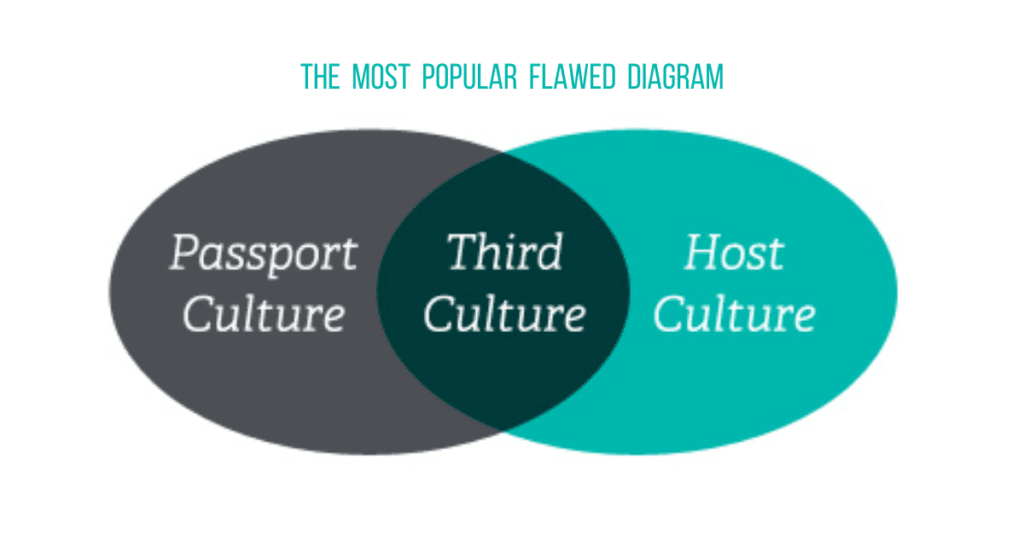
Let me begin by sharing the most popular misconstrued version of the Third Culture Model. I took this model from a major Christian missionary sending agency’s website. (Thankfully, they removed it after several years of bringing it to their attention.) This flawed model generally consists of two overlapping circles and is labeled as follows:The Most Popular Flawed DiagramAs we dive into the two circle model, I would also like to pause and file a formal complaint. Each year when I unpack the TCK profile at Interaction International’s Transit Lounge (our cross-cultural transition seminars for teens), I ask the students to explain what they know about the Third Culture and TCKs. Without fail, four out of five students who have had previous exposure to the TCK profile also depict the profile in this flawed manner. Whether the perpetuation of this adulterated version is due to it being taught incorrectly or teens only halfway listening, this flawed model needs to take a long walk off a short pier.  Rant over–or at least suspended till the next Transit Lounge.


A Middle School Math Lesson

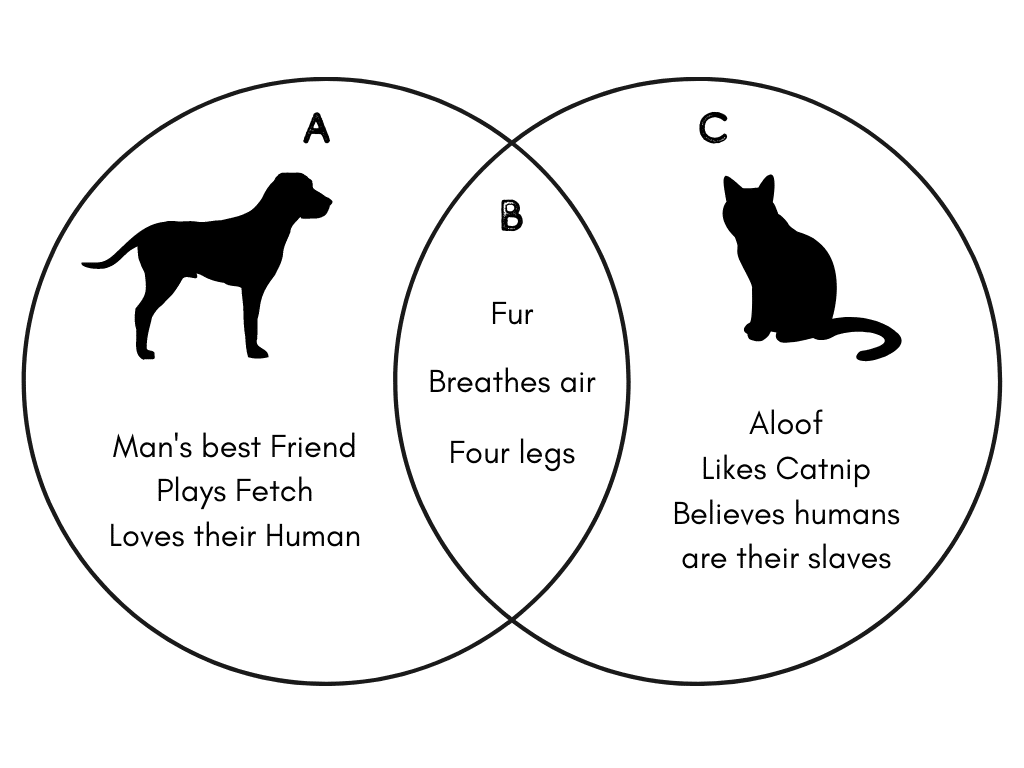
For those who sent middle school math knowledge into oblivion’s circular file, I will refresh your memory on the finer points of a Venn diagram. A Venn diagram depicts information by showing the relationship between the components of the categories. Shared traits overlap/intersect while unrelated traits remain separated. For those not familiar with a Venn Diagram, this illustration will help:

cat and dogThis graphic can then be broken into three sections: (A) characteristics unique to a dog, (C) characteristics unique to a cat,  and (B) characteristics common to both. For example in area A you would include traits like: Man’s best friend, enjoys playing fetch, loves their human. Area B would include common traits to both animals which could include: four legs, covered in fur, breathes oxygen. Finally in area C you might include traits unique to a cat like: aloof, likes catnip, and believes humans are their slaves. (Can you tell I’m a dog person?!)

Back to the Flawed TCK Model

Applying the understanding of a Venn diagram to this flawed two circle Third Culture Kid graphic, we see its failure when we break the diagram into three sections. The middle section, Third Culture, is only composed of that which both the Passport and Host Cultures have in common. Practically speaking, if the passport culture drinks Coke, and the host culture drinks Coke, then all Third Culture Kids must drink Coke. Of course, this is ridiculous. Some drink Inca Kola!

The two overlapping circle model fails to demonstrate the significance of the interstitial culture of a Third Culture Kid. In an attempt to depict that the Third Culture is born out of exposure to two other cultures, it unfortunately falls one circle short of a gold medal and, therefore, needs to be disqualified. If the third circle were added properly, it would then pose a question of copyright infringement on Ruth Van Reken ’s work.  However, if you’ve had the opportunity to get to know Ruth, you know she’s gracious and generous–but it’s still her work.

A Third Circle

However, simply adding another circle does not solve the problem. In my collection of flawed models, many have added a third circle incorrectly.  They, unfortunately, created new ways to pervert Van Reken’s model, thus misconstruing Ruth Useem’s original work on TCKs.

I don’t know where the illegitimate variations of the three overlapping circles started, but I’ve seen them on TCK group sites, on news’ media, on Pinterest, and even on diplomatic websites. Again, to help protect the guilty, I’m withholding sources. (However,  I’m sure you can find them in a Google search like I did.)

A Flawed Three Circle Venn Diagram

TCK Profile Flawed


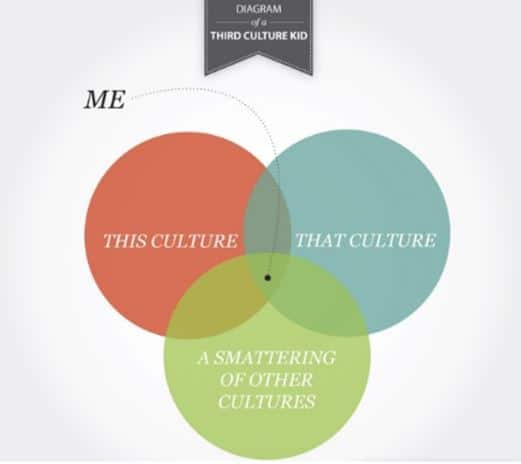
Let’s start with the positive on this graphic I found on a TCK website. I love that this model doesn’t make TCKness exclusively bi-cultural (passport culture/host culture). So many MKs and other TCKs I’ve worked with over the years were not exclusive to only two cultures. I would be willing to venture that many TCKs are influenced by three or more cultures in their adolescence due to their high mobility and their deep friendships spanning many cultures.

While this diagram makes room for the beauty of multiple cultural influences, once again the diagram fails to understand the nuances of a Venn Diagram. By depicting “Me” (aka at TCK) at the intersection of all the cultures, one ends up with the same problem we had with the two circle diagram. The Third Culture is visually depicted as only being what is in common with all cultures. Again, this simply does not accurately depict Ruth Useem’s work on Third Culture Kids.

No 4th Culture Kids

Allow me a sidebar, if you will. There is no such thing as a Fourth Culture Kid. Or Fifth, Sixth, Seventh Culture Kid. TCKs sometimes like to flaunt their TCKness and one-up each other as being MORE Third Culture than the next TCK. There are many ways to score TCK points in this “game.” Having multiple passports earns you additional points. Having flown before you can walk- more points. The more countries you’ve been to–and especially the more countries you’ve LIVED in– a point for each. So count however many cultures you’ve lived in to whatever degree, but no matter how many cultures that have influenced you growing up, it still only creates a Third Culture.

I will dive into this fallacy of 4th Culture more in the fourth post where I share a new model that may help depict better why this doesn’t exist. But in short, the Third Culture IS a unique culture– like Canadian, Chinese or Libyan culture. It is a defined culture–it’s just one that lacks geography and a few other norms ascribed to other “regular” cultures. The Third Culture is a culture between cultures, thus no matter how many unique cultural influences one may have had, they are still just in the Third Culture. I believe that issue is part of the reason Norma McCaig introduced the term Global Nomad; she wanted to get away from this confusion.

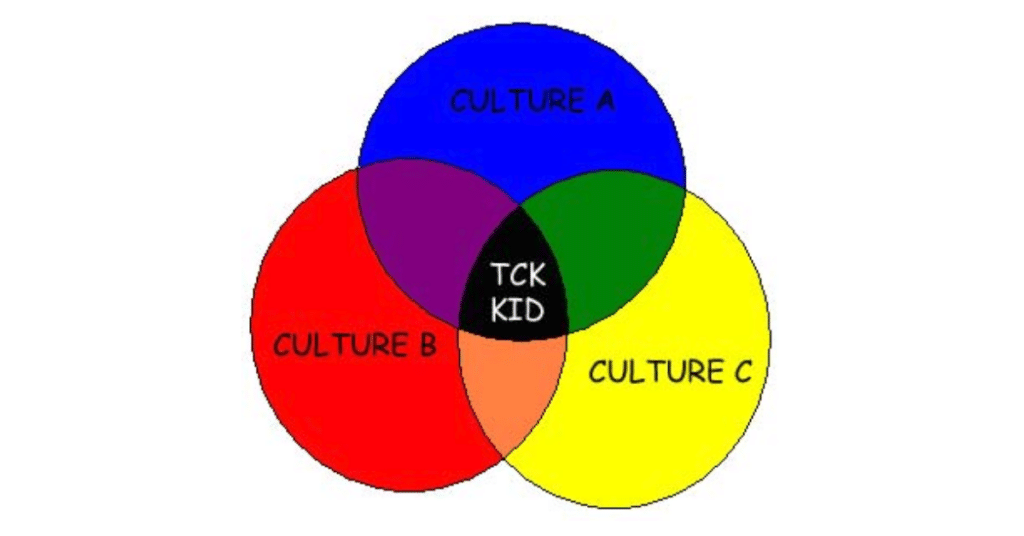
More Flawed Three Circle Graphic

The following is another example from my library. This is from an organization working with a particular subset of TCKs. But just like the previous example from the TCK site, we have the same problem, just different labels.  Also, there’s a redundancy in the black overlap of circles meant to represent a TCK.  If the abbreviation is read as words, “Third Culture Kid Kid” needs the work of a good editor.

TCK Kid


Parents’ Culture vs. Passport Culture

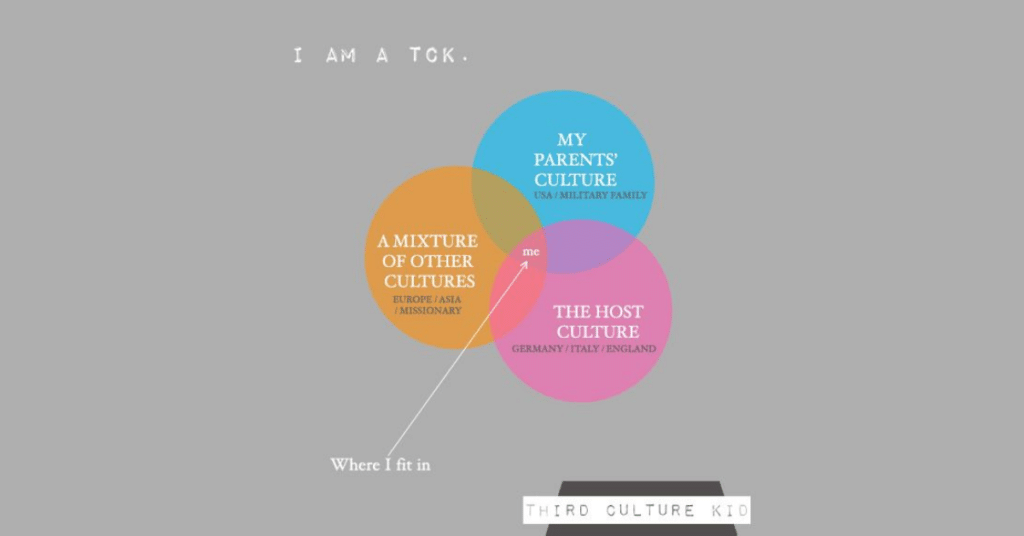
This next graphic I thought was aesthetically beautiful. I originally found this through a search on Pinterest. This version of the three overlapping circles recaptures the wording associated with the TCK profile but ends up with the issues of the previous examples. It depicts the TCK as being the commonality of all the cultures, instead of being influenced by all of those cultures and also an entirely separate third culture.

I AM A TCK


I find it interesting that in this model one of the circles is classified as “my parents’ culture” instead of “my passport culture.”  In more than 20 years of working with TCKs, I have seen TCKs balk at the idea of their parents’ culture being called “home.”  It is their parents’ home culture, not the TCK’s.  The TCK’s home culture is the Third Culture.  Their parents’ home culture often feels  foreign to TCKs. The uncomfortable foreignness of a place their parents tell them is their “home” can stoke grief, loss, and confusion.

There are many other layers and possibilities that exceed the constraints of this series. But for TCKs harboring resentment or hostilities towards their “passport” country, I encourage them to give it the same amount of grace and cultural respect they give the other cultures they’ve been surrounded by.

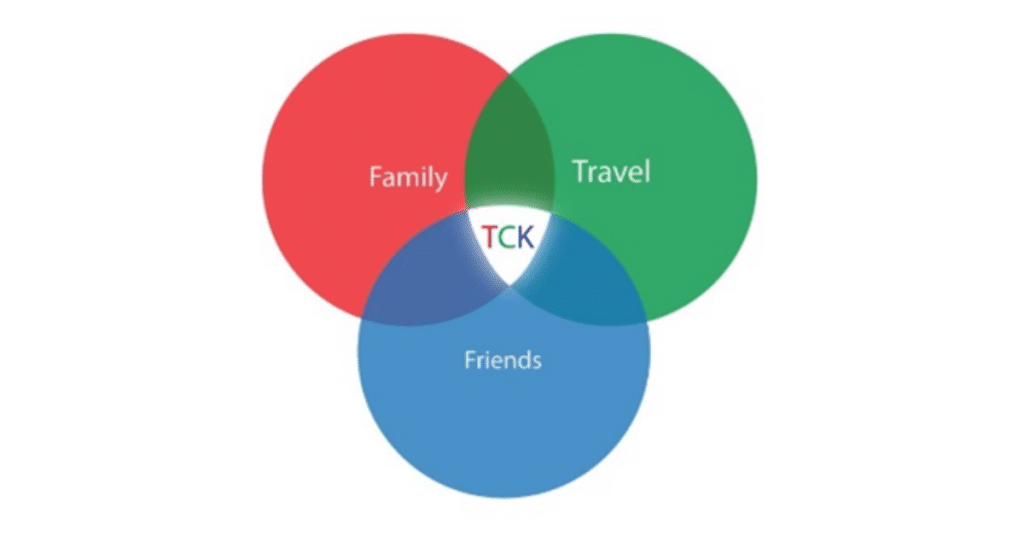
This next flawed version of the Third Culture Profile was found on a UK independent news website and written by a self described TCK. Fortunately, the graphics do not load on this particular article anymore, but the associated article still articulates misconceptions of what a TCK is even without the graphic.

Family Travel Friends

Sometimes when I see these various attempts like this one, I just have to take a deep breath. Maybe they had a deadline? Maybe they just heard about this term and wanted to share before having a chance to fully understand the term.

Yes, travel (what I can only guess the author is calling the TCK attribute of high mobility) is integral to creating the circumstance for an individual in developing their TCK identity and culture. But strictly speaking, the diagram comes to fruition only at the commonality of Family, Friends, and Travel. I’m not even sure what those three even have in common.

Again, this is far from an accurate portrayal of the TCK profile. Maybe the creator intended to say that all of these are parts of their TCK life, but this depiction is far too narrow.

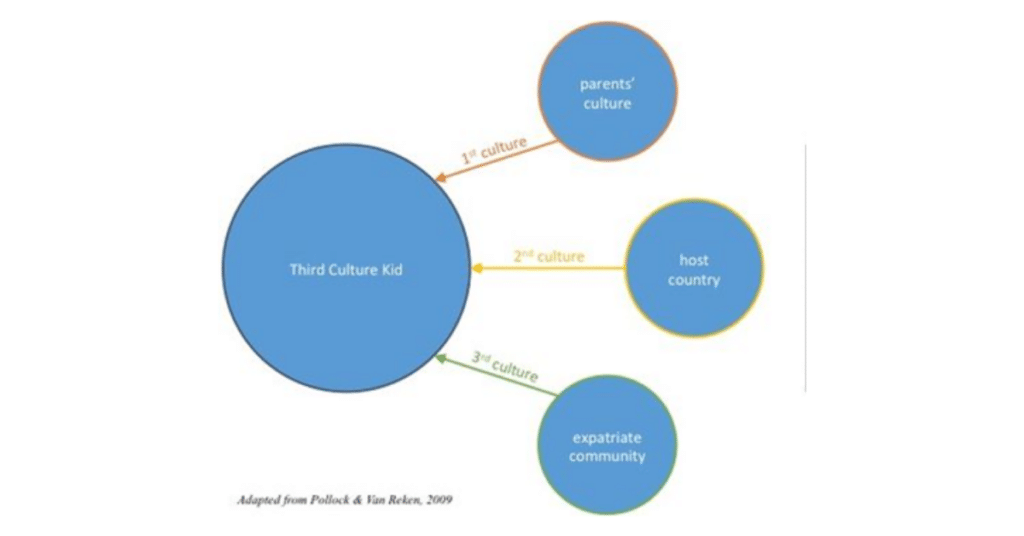
The last of the 6 flawed diagram I would like to share from my collection was published in a psychological magazine by an individual with a  Ph.D. It was reposted on no less than 3 other sites.

The PhD Explanation

Now out of all my collection of flawed models, this one stands apart. It’s fascinating to me the original illustration even cites that it was adapted from Van Reken, quotes Van Reken’s definition, but appears to stumble on the wording of “Third Culture.” For me there are two subtle issues with this diagram.

The first is the confusion steaming from the green line labeled “3rd culture” and then having an additional circle labeled “Third Culture Kid.” It’s problematic to me using the same wording “third culture” in what I assume is two different ways. Duplication of the wording “third culture” causes confusion and detracts from what I believe was trying to be communicated.

The second issue is this diagram unfortunately lends to the heresy that a Third Culture Kid has three cultures influencing them.  Sigh.  It’s not that simple, people.

What is unique about this graphic is it doesn’t fumble into the problem of the other Venn Diagrams I’ve shared. There isn’t issues of mislabeling or inappropriately overlapping to show commonalities that do not exist. It’s also unique in acknowledging the expatriate community (culture).  It deserves a few kudos in spite of its flawed nature.

Unfortunately, not all TCKs experience an expat culture living cross-culturally. An example would be a TCK boy from the Southern region of India living primarily in Northern India where his mother has been sent to direct a hospital. The boy may have little to no opportunity to interact with the expat community so this diagram would exclude him and many others from the Third Culture who rightfully belong there.

A Note to Future Researchers and Writers

If you are looking to work on a Masters or Undergraduate paper/project, an easy way to get your advisor impressed without actually having to be accurate, is to write on the Third Culture. Most professors will find it fascinating and enthralling without having the personal context to know if you’ve submitted inferior information or models. The abundance of half right models on the web, the scarcity of books with good content on the subject, and the lack of a central academic journal on Third Culture research,  it will be hard to find accurate models and check your work. Unfortunately, I have seen this borne out in several papers that have come through my inbox.

Please don’t be this student.  Put in the work.  Do the research.  Think. Don’t use one of these 6 flawed TCK diagrams in your work; don’t perpetuate flawed understanding.

Continued Thought

In the ever growing complexities of this world and the seemingly endless intricacies that exist in the TCK community, many attempts have been made to articulate, both in words and in graphics, this  largely hidden global community. Despite my critiques of some of these models, I want to encourage continued thinking and experimentation on terminology, tools, and resources–and graphics.

My hope in examining these 6 flawed TCK diagrams is not to stir pointless academic discussion about meaningless minutia of how to graphically represent TCKs. Rather, I want to highlight the often overlooked and misunderstood central tenet of the Third Culture profile–that it is a culture distinct and unique on its own. It is a  culture born out of countless potential variations of cross-culture exposure, yet still homogeneous.

As new waves of those working with TCKs are coming into their own, having clarity about the TCK profile will enable them to better develop resources and give a clearer voice to the Global Nomad community.

In my next installment in this series, I may commit TCK sacrilege through suggesting there is room for improvement in the legacy model Ruth Van Reken developed in the 1990s.


PS – If, perchance, you find in your journeys a new misfit diagram inaccurately portraying the TCK model… there’s always room in my collection for one more. Send it to me at bret.taylor@interactionintl.org.

Update-
Part 3: 2 Issues with the Third Culture Model has been posted
Part 4: The Adaptable TCK Model has been posted


Bret Taylor is the Interim Executive Director of Interaction International. He’s been working with MKs/TCKs since 1999. He’s co-host of TCK Live, directs the Transit Lounge programs, presents at MK/TCK Caregiver Training, chairs MKCS, and helps with Among Worlds, Interaction International’s magazine for and by Adult Third Culture Kids.


 

Interaction International