What Transit Lounge Students Found: A Place to Belong
Looking for a place to belong seems simple, but for a Third Culture Kid (TCK) with a complicated relationship to the word “home,” it’s not really simple. When you ask a Third Culture Kid what they’re most tired of explaining, you’ll usually hear some version of the same thing: their life doesn’t fit into small talk. “Where are you from” is a whole story, not a sentence.
So when a group of Missionary Kids (MKs) and other TCKs walked into Transit Lounge this summer, many of them weren’t just looking for a fun week away. They were looking for a place to belong.
Based on the feedback students shared afterward, that’s exactly what they found. And it was, by a wide margin, the thing they talked about most.
Small Groups Did the Heavy Lifting
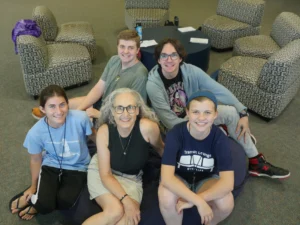
Nearly every student who commented on their favorite part of the week mentioned small groups. They may have liked the schedule, the sessions, or the river outing, but small groups were the favorite. The people they sat and shared their stories with day after day scored highest of all their favorite things.
Small groups gave students the opportunity to share their stories and to hear others’ stories. They were able to ask questions that hadn’t felt possible before. Mutual vulnerability made for mutual admiration and growth. Small groups allowed everyone the opportunity to go deeper than any ice-breaker ever could.
Students noted that small groups were also just plain fun. As they got to know each other and relax a little, small groups became a safe place to goof off while building real relationships. It was a place where inside jokes took root and a group identity was built.
Small groups didn’t work solely on format. The people in the groups made all the difference. The group leader, an adult TCK (ATCK) was part of that difference. Students described feeling seen and accepted–a brand new experience for some.
One theme came up repeatedly. The TCKs discovered that they weren’t as unusual as they’d assumed. Everyone’s story seemed to have some similar struggles. The life stories were radically different in some ways–different countries, different languages, different schooling choices, different security concerns. Yet it was soon evident that they all spoke the same language with the same understanding.
The Friendships Weren’t Incidental
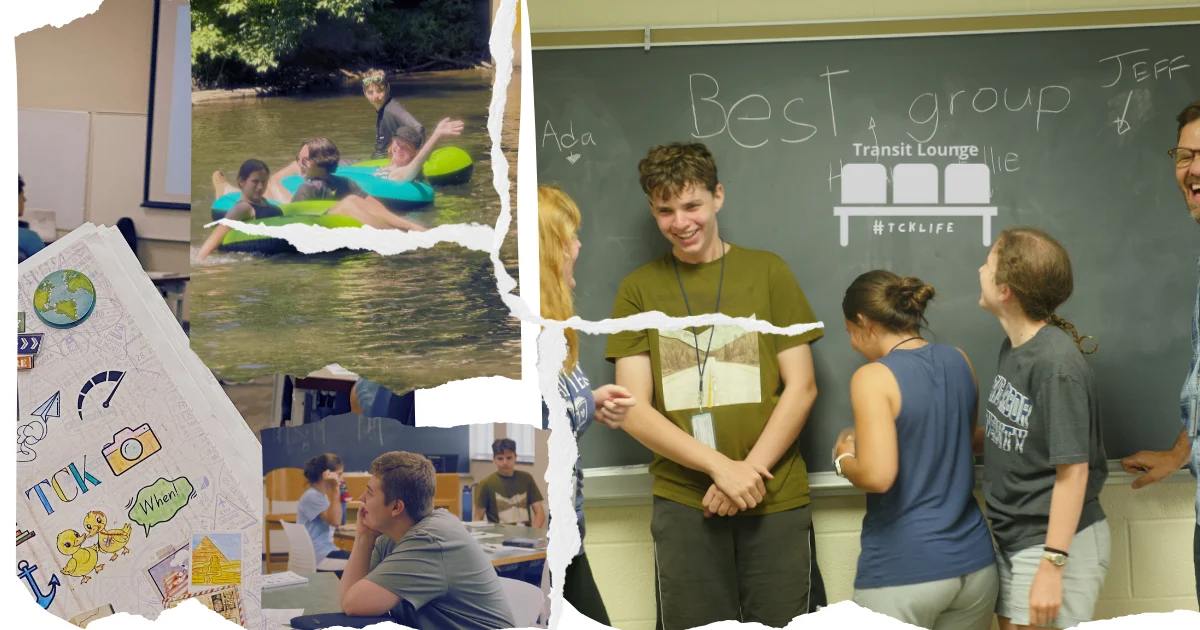
Community doesn’t happen just because you’re in the same room with other people. The students seemed to know that instinctively. As they reflected on the week they pointed to different things that created a sense of community and friendship. River tubing, sports, games, the Variety Show, meals together, and conversations that flowed naturally between seminars and events all laid a foundation for Transit Lounge as a place to belong and to grow friendships.
None of this is framed as filler. It was intentional programming where relationships were built. The structured sessions opened the door and the unstructured time let people walk through it.
Leaders mattered here, too. Students noticed the personal interest and involvement their leaders made in each person. Leaders showed up as role models instead of chaperones. They were all approachable and knowable.
The result felt less like a program that was delivered to them, a program their parents made them attend, and more like they were being welcomed into a community. As they found their place to belong within the community, they were open to learn more about themselves and the worlds where they already have–or soon will have–belonging.
All of this was built one meal at a time, one small group at a time, one killer game of Uno at a time.
The Takeaway that Outweighed All the Others
If there’s one sentence that outweighs all the others, it’s simply this: I am not alone. That single realization showed up more often than any other theme in student feedback.
It’s worth considering the “Why” of that statement. Transition for a TCK is often a solitary experience. Friends and family in both host and passport countries can be sympathetic. However, it’s rare that they understand this exact transition from the TCK’s point of view.
What Transit Lounge offered was people who understood the TCK’s transition to their passport country experientially, not just emotionally. The leaders had all lived some of form of this in-between life.
That distinction matters more than it might sound. Parents can love their TCK deeply and still not fully grasp what it’s like to belong everywhere and nowhere at the same time. A peer who is living it in the same basic timeline as you are gets it. A small group leader who lived it and thrives understands in ways few others do in the TCK’s life.
Transit Lounge, at its core, closes that gap for a week in the midst of this jarring transition. The students noticed.
Why a Place to Belong Matters Beyond a Week
It would be easy to read all this and think, “Kids had a good time and made friends.” While that’s true, it undersells the week.
What the feedback reveals is something closer to a corrective experience. TCKs discovered for the first time, or were reminded of a forgotten truth, that their story doesn’t need to be hidden (at worst) or simplified to be understood. They learned the isolation they carried and anticipated didn’t have to be permanent. That there was a large group of people who understood their language.
For students navigating another transition, whether that’s a return to their passport country, a first year in university, or learning how to live as an adult without the presence of their close family, finding a place to belong outlasts the week.